
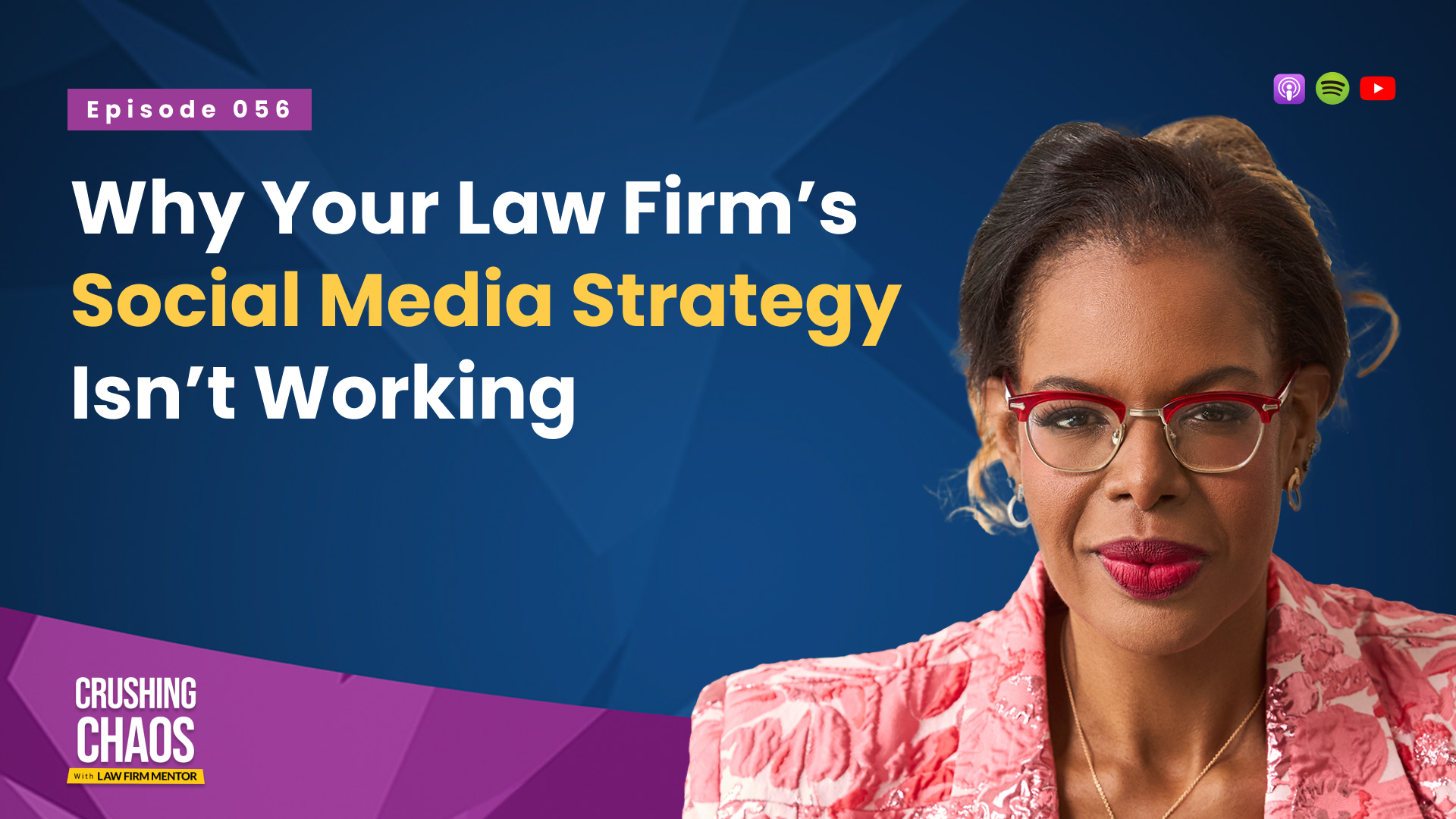
Social media is no longer optional for law firms—but consistency alone is not a strategy. Too many attorneys are posting because they believe they “should,” not because they know what works. And as Allison Williams shared in Episode 56 of Crushing Chaos with Law Firm Mentor, that’s exactly why most firms stay invisible online.
In this episode, Allison breaks down what it means to stop winging your social media and start working it with intentionality, strategy, and metrics that matter. If your posts feel like they’re going into the void, this blog will show you how to turn things around.
Stop Random Posting—Start Posting with Purpose
Many law firm owners assume that posting anything is better than posting nothing. In reality, random content rarely generates traction. As Allison explains, social media algorithms reward engagement—not consistency alone.
That means your posts need to spark interaction. Comments, shares, and saves are the real currency on social platforms. A steady stream of unfocused updates, firm announcements, or case wins without context won’t drive real engagement.
One of the most powerful tools you can use: questions. The human brain is hardwired to respond to them. A question in your caption triggers curiosity and increases the likelihood of a comment, which boosts the reach of your post.
No more shouting into the void. Create content that invites your audience to talk to you—not just scroll past you.
Use Engagement-Driven Tactics
If you want more people to see your posts, you have to show the algorithm that your content matters. Engagement doesn’t happen by accident—it grows through strategy.
Allison shares examples of firms collaborating to comment on each other’s content, a simple but powerful tactic to boost organic visibility. You can do this with:
- Other law firms in your community
- Complementary local businesses
- Professional networks and partners
Engagement tells the platform your content is valuable, which leads to greater reach. Even a handful of consistent collaborators can meaningfully expand your visibility.
Focus on sparking conversation—not just broadcasting information.
Master Keywords the Social Media Way
Lawyers understand SEO for their websites, but many misunderstand how keywords work on social media. Social media platforms don’t prioritize location-based phrases like “divorce lawyer in Seattle” the way Google does.
Instead, they focus on topics and communities.
People search for groups, conversations, and themes—not professionals.
That means your job is to align your content with the topics your ideal clients are already exploring, such as:
- Property disputes
- Navigating co-parenting
- Criminal rights education
- Courtroom strategies
When you create content around topics your audience actively engages with, you dramatically increase your opportunity for visibility.
Think: FAQs, myth-busting posts, trending legal issues, or responses to news stories. You’re entering conversations people care about—not forcing them into your content.
Social media visibility belongs to the firms that show up where the conversations are happening.
Study Your Competitors’ Social Media
Your biggest competitors in search engines might not be your biggest competitors on social media. In fact, many small, agile firms build massive followings long before large firms ever enter the space.
That’s why Allison recommends studying:
- Who is posting consistently in your practice area
- Which of their posts generate engagement
- How they leverage local or trending topics
- What formats (video, text, testimonials) resonate most
You’re not copying competitors—you’re learning from the market.
Identify what’s working for others, then refine it to align with your brand and your audience.
“Gaming the system” doesn’t mean being inauthentic. It means understanding the rules of the platform and using them to your advantage.
Measure the Metrics That Actually Matter
Most lawyers obsess over likes. But likes are the lowest-value metric.
If you want real business results, track:
- Shares (high-value signal for algorithms)
- Saves (indicates your content is worth returning to)
- Click-throughs (drives traffic to your content or site)
These behaviors show depth of engagement—not just passive reactions.
A post with 100 likes and zero click-throughs is less valuable than a post with 50 likes, 10 saves, and 5 clicks.
Social media platforms want to keep users on their platforms. When your posts help them do that, you get rewarded with visibility.
Measure actions—not applause. That’s where the growth comes from.
Stop Winging It—Start Working a Real Strategy
This is where true CEO-level marketing begins.
Allison urges firm owners to move from guesswork to data-driven posting. That means:
- Testing one variable at a time (caption, image, time of day)
- Repeating what works
- Dropping what doesn’t
- Tracking results weekly
- Studying which formats your audience prefers
Your most engaging content might be videos, testimonials, case studies, or trending commentary—but you won’t know until you track it.
Great social media strategies are not born—they’re built.
And when you align your content with audience interest and algorithm behavior, you stop winging it and start working it. That’s when social media becomes a real lead-generation system for your law firm.
Ready to Take Control of Your Social Media Strategy?
Episode 56 is packed with actionable insights to help you transform your online presence.
Watch the full episode on YouTube
Listen on your preferred platform:
- Spotify: https://open.spotify.com/episode/3whNR3lH6KcoylTS6i3TBu?si=XqJF9EMnS8KWW3p-bDfgJQ
- Apple Podcasts: https://podcasts.apple.com/us/podcast/why-your-law-firms-social-media-strategy-isnt-working/id1497474051?i=1000727840116
If you’re ready to stop posting out of obligation and start generating real visibility and leads, Law Firm Mentor can help you build a strategy that actually works.
Book a Discovery Call and take the next step in scaling your firm with data-driven clarity.